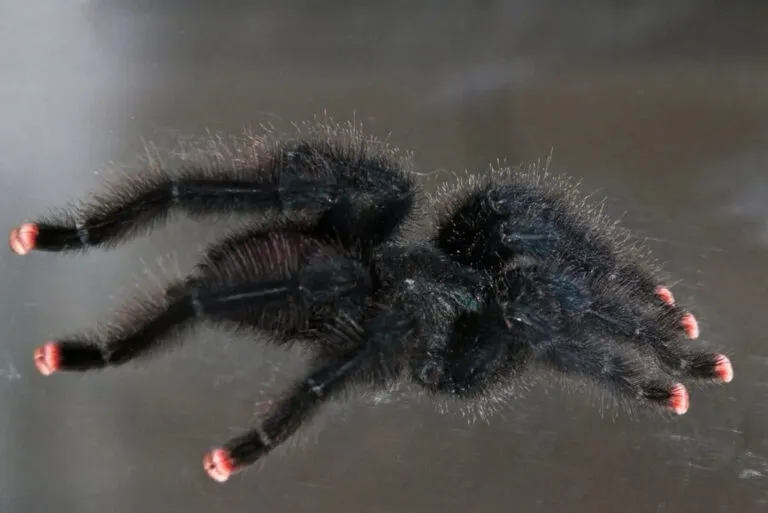
What is a Pink Toe Tarantula?
The Pink Toe Tarantula (Caribena versicolor), a captivating arboreal species, has won the hearts of many pet enthusiasts. Native to the rainforests of the Caribbean, these spiders are celebrated for their striking appearance and relatively docile temperament. They are distinguished by their vibrant coloration, particularly the pink tips on their toes, hence the name. Their bodies are typically covered in a velvety coat of hairs, with colors ranging from dark brown to iridescent greens and purples, adding to their visual appeal. As arboreal creatures, they spend most of their time in trees, building intricate webs to create shelter and ambush prey. This behavior shapes their care requirements, making vertical space and secure climbing structures essential in their habitats. The Pink Toe Tarantula’s popularity stems from its beauty, manageable size, and the intriguing behaviors it exhibits, making it a fascinating subject for observation and care for both novice and experienced arachnid keepers.
Common Signs of a Dead Pink Toe Tarantula
Dealing with the loss of a pet is always difficult, and when it comes to a Pink Toe Tarantula, knowing the signs of death is crucial for proper handling and emotional closure. Understanding these indicators not only helps confirm the passing of your pet but also allows for appropriate measures to be taken. Several key signs point to the unfortunate reality of a deceased tarantula. These signs include a lack of movement, abnormal body positioning, color changes, the absence of response to stimuli, and a foul odor emanating from the enclosure. Recognizing these signs helps in confirming whether a Pink Toe Tarantula has passed away, enabling you to proceed with the appropriate steps for care and disposal. Being able to quickly identify these signs is key to understanding the situation. These points should be examined carefully to ensure an accurate determination and to guide the steps that follow. Let’s explore these signs in detail to provide you with the necessary knowledge to address this sensitive matter.
Lack of Movement

One of the most apparent signs that your Pink Toe Tarantula may have passed away is the complete absence of movement. Pink Toe Tarantulas are typically active, especially during the evening and early morning hours. They will move around their enclosure, reposition themselves, and react to any disturbances. If your tarantula has remained motionless for an extended period, such as several days, this could be a strong indication that it has died. Observe the spider carefully, looking for any signs of respiration or any twitching. If you see no movement at all, especially if it has been motionless for a significant amount of time, the likelihood of it being deceased significantly increases. This lack of movement alone is often a clear first sign that something is wrong and should be checked carefully, but more verification needs to be made before coming to a conclusion. Consider it the first piece of the puzzle in assessing the situation.
Body Position
The position of your Pink Toe Tarantula’s body can also provide clues to its condition. Living tarantulas typically have a natural posture. When a tarantula dies, its body may assume an unnatural or contorted position. Look for the legs curled up tightly against the body, or the spider lying on its back or side in a manner not typically seen when alive. This posture, especially when coupled with other signs, can be a strong indicator of death. However, bear in mind that a tarantula might sometimes molt in a position that could look similar to a deceased one. The difference lies in the details, such as the presence of a carapace or the condition of the legs and other body parts. By carefully checking the posture of your tarantula and comparing it to your past observations, you can assess any changes.
Color Changes
A Pink Toe Tarantula’s coloration is another crucial indicator of its health. Living tarantulas exhibit vibrant and well-defined colors. Upon death, their colors may begin to fade or change. The pink tips of the toes might lose their vibrancy, the body may appear duller, and the overall coloration might change. Noticeable discoloration is a key sign to watch for. Look for alterations in hue or overall color fading. These changes can range from a general loss of pigment to more dramatic transformations. If you notice these changes, especially combined with other indications like lack of movement or unusual posture, then it is quite possible that your tarantula has died. The speed at which these changes occur can vary, but any obvious alteration should be thoroughly examined to ensure proper care.
No Response to Stimuli

A healthy Pink Toe Tarantula will respond to stimuli. If you gently tap on the enclosure or introduce a small disturbance, a live tarantula will react. It may move, retreat, or show some form of defense. If your tarantula does not respond to any form of stimulus, it could be a sign of death. Try lightly touching the tarantula with a soft object, such as a paintbrush or a feather. Observe carefully for any reaction. If there is no response, coupled with the lack of movement, the unnatural positioning, or the changes in color, it strengthens the likelihood that your tarantula has died. This lack of reaction is a sign that its nervous system is no longer functional, a clear indicator of death.
Foul Odor
A foul odor is often one of the most definitive signs of a deceased Pink Toe Tarantula. As the spider decomposes, it releases gases that create a distinct and unpleasant smell. This odor is a clear signal that the tarantula has died and that decomposition has begun. The intensity of the smell can vary based on the size of the tarantula and how long it has been deceased. This odor is not typically present in a healthy enclosure, so its appearance should prompt immediate concern. If you detect a strong, unpleasant smell coming from your tarantula’s enclosure, it is imperative to investigate further. This is often a very clear sign that your tarantula is dead. This should be the final confirmation, if other signs have been noticed.
What to Do If Your Tarantula Dies
When you confirm that your Pink Toe Tarantula has died, it’s important to handle the situation with care and respect. Proper handling ensures that the deceased tarantula is treated in an appropriate way. Remove the tarantula from its enclosure using a pair of tongs or gloves to avoid direct contact. Gently place it in a secure container, such as a plastic bag or a sealed box, and then take care to carefully dispose of the remains. Consider your emotional state, because it can be a difficult time. Take the opportunity to think about the time you had with your pet. Knowing how to act when a tarantula dies is key to handling the situation. Proper disposal and the emotional aspect of dealing with loss are both important steps. Following these steps will ensure that the situation is handled respectfully and with consideration for your feelings.
Confirming Death

Before taking any action, it’s essential to confirm the death of your tarantula. Even if several signs point to death, it is important to be completely sure. Double-check for movement, respiration, and response to stimuli. Check body posture and coloration to make sure that they do not contradict what you’ve seen before. If you are in any doubt, wait for several hours, or even a full day, before proceeding. It’s better to be certain than to act prematurely. If all the signs confirm that your tarantula has indeed passed, then you can proceed with the proper disposal of the remains. This approach avoids any potential misunderstandings and assures that you take the appropriate steps.
Proper Disposal of Your Tarantula
After confirming the death of your Pink Toe Tarantula, the next step is proper disposal. Burial is a common option, especially if you have a suitable outdoor space. Choose a location and bury the tarantula at a depth sufficient to prevent scavenging. Alternatively, you can seal the remains in a plastic bag and dispose of them in a sealed trash container. Consider the regulations of your local area to make sure you meet any requirements. The goal is to dispose of the remains in a way that is both hygienic and respectful of the pet. By handling the remains carefully and following appropriate disposal methods, you can honor your pet’s memory and find closure.