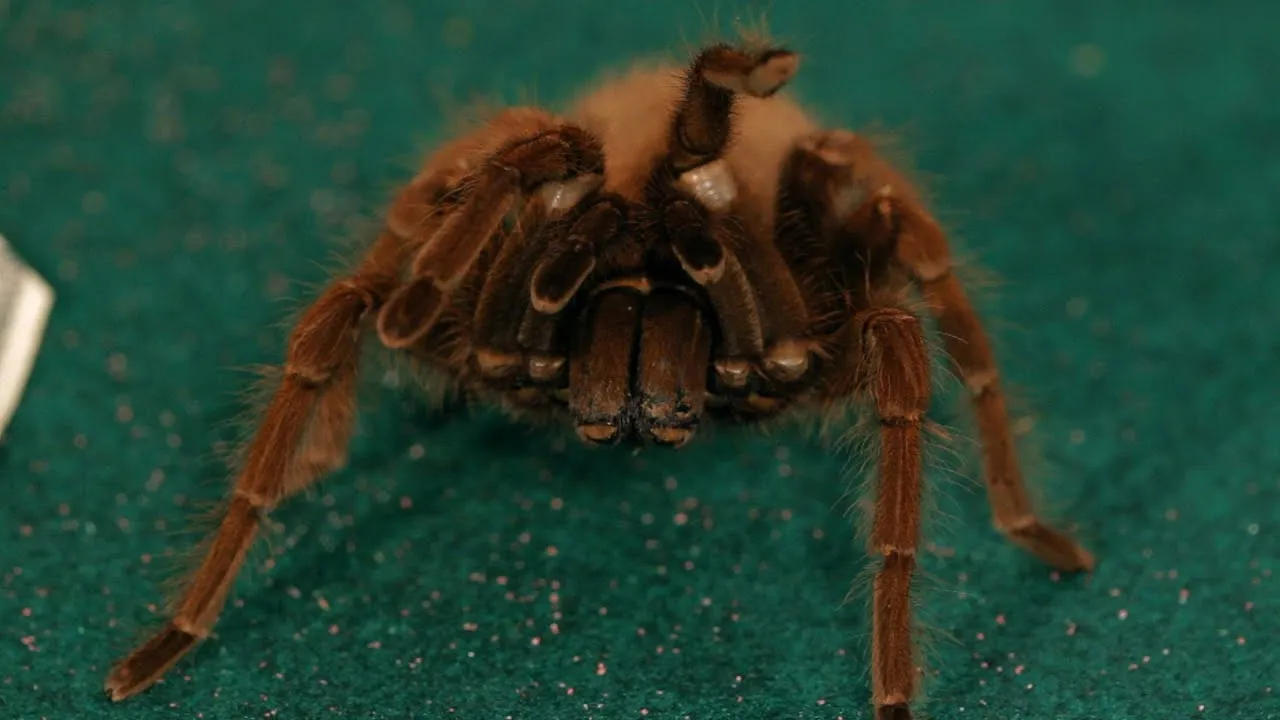
What is the Giant Goliath Bird Eater Tarantula?
The Giant Goliath Bird Eater (Theraphosa blondi) is the world’s largest spider, a title that immediately captures the imagination. Found in the rainforests of northern South America, this impressive arachnid isn’t just big; it’s a symbol of the exotic and often misunderstood world of spiders. These spiders are a member of the tarantula family, known for their size, impressive fangs, and sometimes intimidating appearance. Despite their name, these spiders rarely eat birds, the moniker originating from an early engraving showing one eating a hummingbird. Their diet primarily consists of insects, but they are capable of taking down small vertebrates. Their existence sparks curiosity and fascination, making them a subject of both fear and admiration. Understanding this creature provides insight into the biodiversity of the Amazon and the unique adaptations of spiders.
Size and Appearance
The Giant Goliath Bird Eater’s size is arguably its most striking feature. They can have a leg span of up to 12 inches (30 cm), making them larger than many dinner plates. Their weight can reach over 6 ounces (170 grams), a significant mass for an invertebrate. Their bodies are covered in setae, or hairs, which give them a furry appearance and provide sensory information. These hairs can also be urticating, meaning they can cause irritation if they come into contact with skin. Their coloration typically ranges from dark brown to light tan, providing camouflage within their natural habitat. The sheer scale of this tarantula sets it apart, and its appearance is a testament to the adaptations that allow it to thrive in its environment.
The Giant Goliath’s Immense Size

As the world’s largest spider, the Goliath Bird Eater immediately garners attention due to its immense size. The leg span, crucial for both movement and sensory information, can extend up to a foot. This impressive reach allows them to cover ground effectively while hunting. The weight, exceeding that of many small mammals, is supported by a robust exoskeleton. Their size is a product of evolutionary adaptation, providing advantages in hunting and defense. Understanding their size is the first step in appreciating the marvel of this arachnid.
Distinctive Features
Beyond its massive size, the Giant Goliath Bird Eater is characterized by several distinctive features. Their fangs, or chelicerae, are the largest of any spider, used for injecting venom and crushing prey. The urticating hairs on their abdomen serve as a defense mechanism, causing irritation when disturbed. Their sensory capabilities are highly developed, enabling them to detect vibrations and movement, vital for both hunting and avoiding predators. The color palette, ranging from brown to tan, provides effective camouflage. These attributes combine to make the Goliath Bird Eater a unique and formidable creature.
Habitat and Distribution
The Giant Goliath Bird Eater is native to the rainforests of northern South America, specifically found in countries like Brazil, Venezuela, Guyana, Suriname, and French Guiana. They prefer humid environments with high temperatures, typically living in burrows in the ground. Their distribution is limited to these specific ecological niches. Their preference for a secluded lifestyle highlights their need for safety and the availability of prey. Preserving their habitat is crucial to ensure that these remarkable spiders continue to thrive. The preservation of their natural habitat is critical for their survival and the maintenance of biodiversity.
Where They Live

These tarantulas make their homes in burrows, often abandoned rodent holes, or beneath rocks and tree roots. The burrows offer protection from predators and provide a stable microclimate. The environment must be humid, and the ground must be suitable for digging. Their choice of habitat highlights their preference for seclusion and their need for security, as well as the availability of appropriate prey items. Their habitat also provides the temperature gradient they need to regulate their body temperature.
Ideal Environment
The ideal environment for the Giant Goliath Bird Eater consists of high humidity, warm temperatures, and a substrate that allows burrowing. Rainforest environments provide these conditions, with dense foliage and ample rainfall. They prefer secluded locations within these habitats, avoiding areas with excessive disturbance. Their need for specific environmental conditions demonstrates their sensitivity and their dependence on their environment for survival and reproduction. The preservation of their habitat is vital to sustain their population and ensure the continuation of their life cycle.
Diet and Hunting
Despite their common name, Giant Goliath Bird Eaters do not primarily consume birds. Their diet consists mainly of insects, but they also eat other invertebrates, small amphibians, reptiles, and even rodents. They are opportunistic hunters, ambushing their prey from their burrows or actively stalking them. Their powerful fangs and potent venom are used to subdue their prey. Their dietary flexibility and hunting strategies allow them to survive in various environmental conditions. The food chain is highly important to maintain their population.
What They Eat

The Giant Goliath Bird Eater’s diet includes a wide array of prey, reflecting their opportunistic hunting style. Insects form the cornerstone of their diet. In addition, they will consume other invertebrates, small frogs and toads, lizards, and sometimes even small mammals. This dietary diversity ensures their survival in different environmental conditions, enabling them to adjust their feeding habits. This ability to eat multiple type of food is critical for survival.
Hunting Techniques
These tarantulas are primarily ambush predators, patiently waiting in or near their burrows for prey to pass by. They use vibrations detected through their setae to locate their prey. Once within striking distance, they lunge with remarkable speed, injecting venom with their fangs. The venom paralyzes the prey, allowing the tarantula to begin digestion. Their hunting methods are an example of their efficient predatory adaptations.
Behavior and Temperament
Giant Goliath Bird Eaters are generally docile but can become defensive if threatened. They may exhibit a threat posture, raising their front legs and displaying their fangs. They are solitary creatures, except during mating season. Their behavior is influenced by their environment and their need to survive. Understanding their temperament is key to understanding their role in their ecosystem. The animal is usually docile, but caution is always advised.
Defensive Mechanisms

When threatened, the Giant Goliath Bird Eater employs a combination of defensive mechanisms. They may raise their front legs and display their fangs as a warning. They can also flick urticating hairs from their abdomen towards the threat, causing skin irritation. In addition, they possess the ability to bite, though their venom is not considered lethal to humans. These defense systems help them to stay safe in their natural habitat.
Lifespan and Reproduction
These tarantulas have a relatively long lifespan. Females can live for over 25 years, while males typically live for a shorter period, around 3-6 years. Reproduction involves a complex mating ritual. The female lays her eggs in a silken egg sac, which she protects until the spiderlings hatch. The lifespan and reproductive strategies are vital to the species’ survival. The long life of the female allows them to have more offspring.
Mating and Egg Laying
Mating begins with a courtship dance, where the male drums on the ground and approaches the female carefully. After mating, the female lays her eggs, which she carefully protects within a silken egg sac. She stays with the egg sac until the spiderlings hatch, providing them with care. This elaborate process highlights the dedication to the survival of the species.
Lifespan in Captivity and Wild

The Giant Goliath Bird Eater’s lifespan varies depending on the environment. In the wild, these spiders face various challenges that affect their longevity. Captive environments, such as terrariums, can offer more stable conditions. Females tend to live longer, especially in captivity. The differences in their lifespans are related to the conditions in which they live. With proper care, these spiders can live a long life.