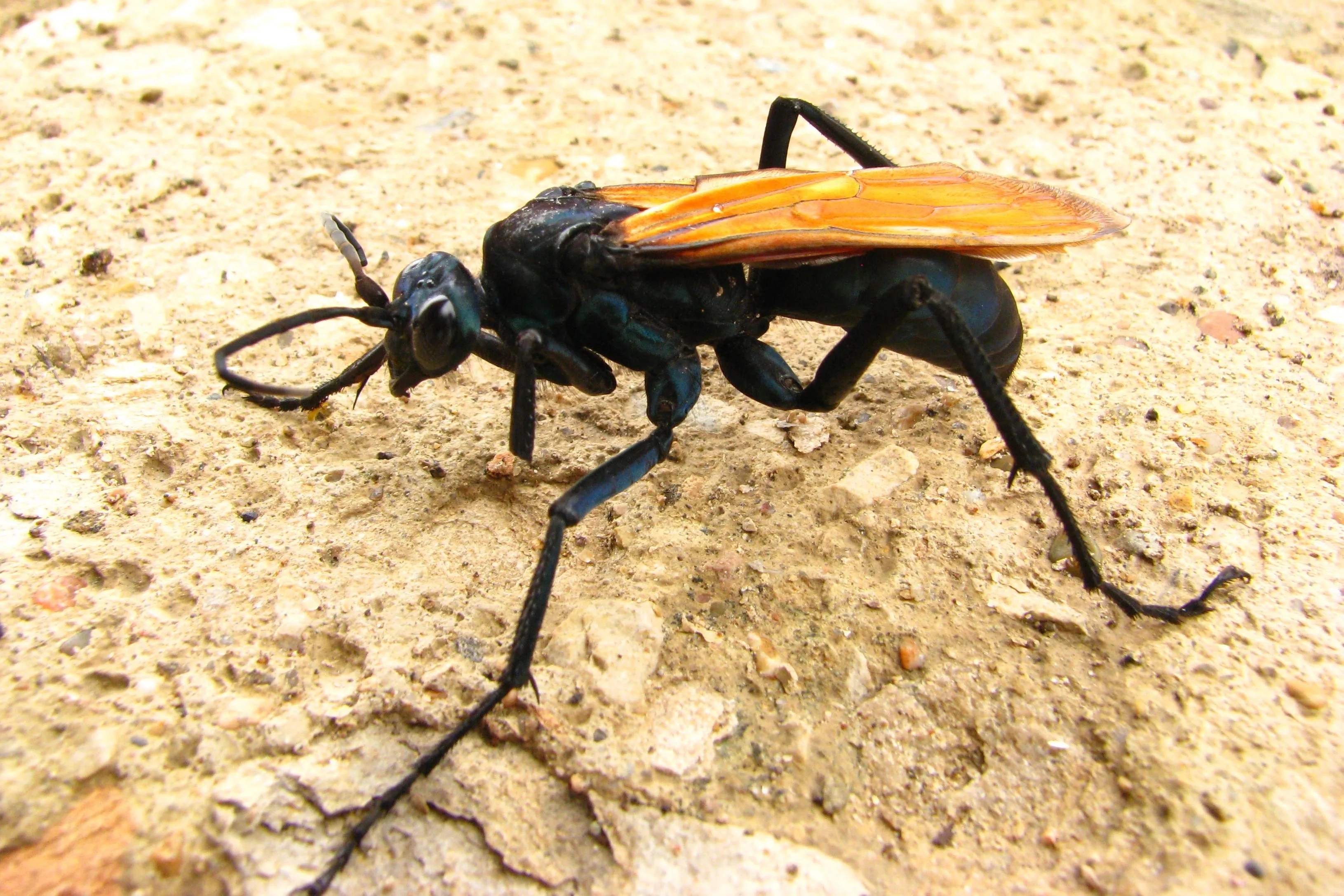
What is a Tarantula Hawk?
The tarantula hawk is a remarkable insect, a large species of spider wasp that is known for its striking appearance and its daunting sting. These wasps are found in various regions, including the southwestern United States, and are easily recognizable by their vibrant blue-black bodies and orange wings. They are solitary creatures, known for their hunting behavior, which involves paralyzing tarantulas, and using them to host their larvae. Their size and the intensity of their sting make them a subject of both fascination and fear. They are not aggressive towards humans unless provoked, but their sting is considered one of the most painful in the insect world.
The Tarantula Hawk’s Sting The Pain and Effects
The sting of a tarantula hawk is infamous for its extreme pain, often described as excruciating and debilitating. This pain, although intense, is usually short-lived, lasting only a few minutes. The wasp’s venom contains a neurotoxin that paralyzes its prey, which in this case is the tarantula. The venom does not kill the spider outright; instead, it immobilizes it, allowing the wasp to drag it to a burrow where it will serve as a host for the wasp’s egg. For humans, the sting can cause immediate, intense pain, followed by localized swelling and redness. The experience is often compared to being struck by lightning and can leave the victim incapacitated for a short period. The pain is so intense that it is often used as a benchmark in pain research.
The Tarantula’s Predicament How it Deals With a Sting

When a tarantula is stung by a tarantula hawk, it faces a severe predicament. The sting’s primary effect is paralysis, rendering the tarantula immobile. This immobility is crucial for the wasp, as it allows it to transport the spider to its burrow. The tarantula remains alive but paralyzed, and the wasp then lays an egg on the spider’s abdomen. When the egg hatches, the larva feeds on the paralyzed tarantula, consuming it alive. This process highlights the complex and often brutal nature of survival in the wild. The tarantula’s predicament underscores the tarantula hawk’s predatory strategy and the delicate balance of life in their shared ecosystem. This interaction is a grim illustration of the predator-prey relationship.
Fact 1 What Happens to a Tarantula
When a tarantula is stung by a tarantula hawk, the primary outcome is paralysis. The wasp’s venom immediately affects the tarantula’s nervous system, causing its legs to become immobile. This paralysis allows the tarantula hawk to safely handle and transport the much larger spider. The venom does not kill the tarantula; instead, it preserves the spider in a state that is ideal for the wasp’s larvae. The tarantula remains alive, but unable to move or defend itself, while the wasp goes about its business. The tarantula then becomes a living incubator for the wasp’s offspring, a gruesome fate that illustrates the stark realities of nature’s survival strategies.
Fact 2 The Survival Rate
The survival rate of a tarantula after being stung by a tarantula hawk is effectively zero. The purpose of the sting is not to kill the tarantula but to paralyze it, ensuring it remains alive to serve as a host for the wasp’s larva. Once the larva hatches, it begins to feed on the tarantula, which is still alive. This process continues until the larva matures, at which point the tarantula is completely consumed. Therefore, while the tarantula survives the initial sting, its ultimate fate is predetermined by the parasitic nature of the tarantula hawk’s life cycle. The tarantula’s survival is thus limited to the duration of the wasp larva’s development.
Fact 3 Recovery Time

There is no recovery time for a tarantula after being stung by a tarantula hawk. The venom paralyzes the spider, but does not allow it to recover. The tarantula remains in a paralyzed state while the wasp larva develops and consumes it. The concept of recovery does not apply in this scenario, as the tarantula’s fate is sealed from the moment it is stung. The paralysis is not a temporary condition from which the spider can later recover. It is a means to an end in the tarantula hawk’s life cycle, ensuring a constant food supply for its offspring.
Fact 4 The Role of the Sting in Tarantula Hawk Life Cycle
The sting plays a vital role in the tarantula hawk’s life cycle. It is the key element that allows the wasp to reproduce. The sting paralyzes the tarantula, providing a mobile food source for the wasp larvae. After paralyzing the tarantula, the female wasp drags it to a burrow, where it lays a single egg on the spider’s abdomen. When the egg hatches, the larva begins to feed on the paralyzed tarantula. The tarantula remains alive throughout the larval stage, serving as a living food source. This cycle ensures the survival of the tarantula hawk species, demonstrating a specialized and highly effective predatory strategy.
Fact 5 How Humans Can Help
Humans have a very limited ability to directly help a tarantula that has been stung by a tarantula hawk. The tarantula hawk’s life cycle is too far advanced by the time a human might discover the situation. However, humans can indirectly support the tarantula population by preserving and protecting their natural habitats. This includes avoiding the use of pesticides that could harm tarantulas and other insects, as well as educating others about the importance of these creatures. Maintaining a healthy ecosystem provides tarantulas with more opportunities to thrive, and this will increase their chances of survival in the face of predators such as the tarantula hawk. The most effective way to assist is by respecting their environment.
Conclusion Can Tarantulas Survive?

In conclusion, a tarantula cannot survive a tarantula hawk sting in the traditional sense. While the spider does not die immediately from the sting, it is paralyzed and becomes a host for the wasp’s larva, which consumes it alive. The tarantula hawk’s life cycle is entirely dependent on this process, making the tarantula’s survival impossible after the sting. This relationship highlights the harsh realities of nature, where survival is often a zero-sum game. Understanding this relationship helps appreciate the complex dynamics of ecosystems and the crucial roles that each species plays within them.