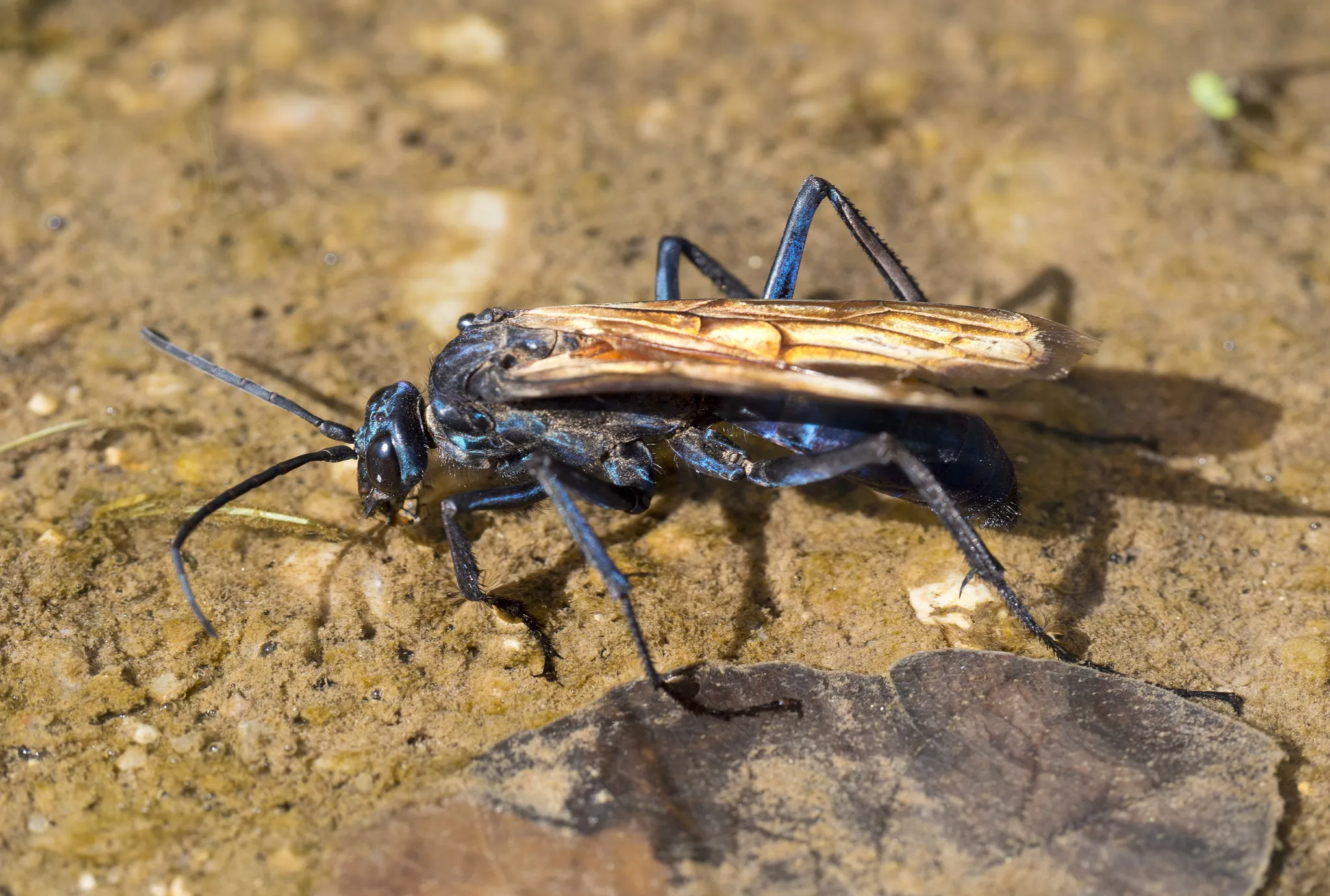
What is a Tarantula Hawk?
The tarantula hawk is a large, solitary wasp known for its impressive size, vibrant coloration, and, most notably, its excruciating sting. These wasps are members of the Pompilidae family and are renowned for their unique hunting behavior, specifically their tendency to prey on tarantulas. They are a fascinating subject for entomologists and nature enthusiasts alike, showcasing an intricate interplay of predator and prey within their ecosystem. Understanding the tarantula hawk requires delving into its physical characteristics, geographical distribution, and the intricacies of its life cycle, which culminates in a dramatic encounter between the wasp and its tarantula host.
Appearance and Identification
Tarantula hawks are easily recognizable due to their striking appearance. They typically boast a body length of 1 to 2 inches (2.5 to 5 cm), making them one of the largest wasp species. Their most prominent feature is the combination of a black or blue-black body and bright, rust-colored wings. This bold coloration serves as a warning signal to potential predators, advertising the wasp’s formidable sting. Distinguishing between different species can be challenging, often requiring a closer look at subtle variations in body shape and color patterns. However, their large size and distinctive color scheme make them easily identifiable in the field, a sight that captures the attention of anyone fortunate enough to encounter them.
Habitat and Distribution

Tarantula hawks are primarily found in arid and semi-arid regions across the globe. In the United States, they are most commonly seen in the southwestern states, including Arizona, New Mexico, and Texas, though their range extends into other areas as well. These wasps prefer habitats with open areas and sandy or loose soil, which are suitable for tarantula burrows and the wasps’ own nest construction. They are also found in parts of Central and South America, and other regions that offer a warm, dry environment that supports the tarantulas they hunt. Their presence is often a sign of a healthy ecosystem, where both predator and prey can thrive in a balanced manner. The tarantula hawk’s adaptability to these harsh environments is a testament to its resilience.
The Tarantula Hawk Sting
The sting of a tarantula hawk is legendary, often described as one of the most painful stings in the insect world. While the venom itself is not deadly to humans, the pain it induces is extreme. The wasp’s sting is primarily used to paralyze its prey, the tarantula, before dragging it to a burrow to lay an egg on its abdomen. For humans, the sting elicits a sudden, intense pain that quickly spreads, described as a searing, throbbing sensation. Although the pain subsides after a few minutes, the experience is unforgettable. It is important to note that while painful, the sting is rarely dangerous unless the person has an allergic reaction. The tarantula hawk’s sting serves as a powerful defense mechanism and a crucial tool in its life cycle.
The Pain Index
The Schmidt Sting Pain Index, developed by entomologist Justin Schmidt, rates the relative pain of insect stings. The tarantula hawk sting holds a prominent position on this index, earning a level 4 rating, the highest category. This indicates the sting is among the most painful experiences humans can endure from an insect. The pain is often described as intensely excruciating, incapacitating, and causing an immediate and overwhelming wave of sensation. While the pain itself is the most notable characteristic, it is crucial to emphasize that individual reactions can vary. The intensity of the pain and duration can differ depending on the person, the amount of venom injected, and the location of the sting. However, the tarantula hawk sting is undeniably a significant and memorable event for anyone unfortunate enough to experience it.
What to Do if Stung

If stung by a tarantula hawk, the immediate response should be to remain calm and avoid any sudden movements. The pain will subside within a few minutes. There is no specific treatment for the sting itself, but the focus should be on managing the pain and preventing any secondary complications. The affected area may be cleaned with soap and water to reduce the risk of infection. Applying ice packs can help to soothe the area and reduce swelling. Over-the-counter pain relievers, such as ibuprofen or acetaminophen, can be used to alleviate the pain. Individuals with known allergies to insect stings should seek immediate medical attention. While the sting is incredibly painful, proper care and management can mitigate the immediate effects and allow for a full recovery. It is important to remember that in most cases, the sting is not life-threatening, but should be taken seriously.
The Tarantula Hawk’s Life Cycle
The life cycle of the tarantula hawk is an extraordinary story of predation and parasitism. It begins with the female wasp hunting for a tarantula, often a large and intimidating spider. Once a tarantula is located, the wasp will sting the spider to paralyze it. The wasp then drags the immobilized tarantula back to a burrow, either one that the wasp digs itself or an existing one. It is in this burrow that the wasp will lay a single egg on the paralyzed tarantula’s abdomen. The egg hatches into a larva, and that larva feeds on the still-living tarantula, consuming it from the outside in. This process continues until the larva pupates and eventually emerges as a fully grown tarantula hawk. The entire process, from egg to adult, can take several months, highlighting the intricate biological drama of the tarantula hawk’s survival.
Hunting and Paralyzing Tarantulas
The hunt for a tarantula is a dramatic display of natural strategy and skill. The female tarantula hawk actively searches for tarantulas, often patrolling areas where the spiders are known to reside. When a tarantula is found, the wasp initiates a carefully orchestrated attack, attempting to sting the spider in a vulnerable spot. The wasp’s sting is remarkably precise, targeting the nerve centers of the tarantula to induce paralysis. The wasp uses a precise technique to inject its venom to completely immobilize the much larger spider. The paralyzed tarantula is then transported, often over considerable distances, to the wasp’s nest or burrow, where the next phase of its life cycle begins. The hunting process underscores the intricate balance of power between predator and prey, showcasing the tarantula hawk’s prowess as a skilled hunter.
Larval Development and Growth

Once the tarantula has been brought to the burrow, the tarantula hawk larva begins to feed. The larva emerges from the egg and attaches itself to the paralyzed tarantula’s abdomen. It begins consuming the tarantula from the outside, avoiding vital organs for as long as possible to keep the prey alive and fresh. The larva grows rapidly as it feeds, molting its exoskeleton several times. This phase lasts for several weeks, during which the larva becomes a substantial size. The larva eventually pupates inside the tarantula’s body, forming a cocoon. The tarantula, by this time, is almost entirely consumed. The duration of the larval stage varies depending on environmental factors, such as temperature and food availability. The larva undergoes a complete metamorphosis before emerging as an adult tarantula hawk.
The Role in the Ecosystem
The tarantula hawk plays a significant role in its ecosystem, maintaining balance by controlling tarantula populations. By preying on tarantulas, these wasps help to regulate the number of spiders, preventing potential overpopulation. This, in turn, influences the populations of other species, creating a ripple effect through the food web. Furthermore, tarantula hawks contribute to the nutrient cycle by providing a food source for scavengers, as well as providing resources for other organisms that make use of the abandoned nests. The wasps’ presence indicates a relatively healthy and diverse environment, where both predator and prey can coexist. Understanding the tarantula hawk’s ecological role highlights the importance of biodiversity and the complex interactions that sustain life in a given environment.
Predators and Threats
Despite their formidable sting and size, tarantula hawks do face threats from various predators and environmental factors. Birds, particularly those adapted to arid environments, may occasionally prey on tarantula hawks. Other insects, such as certain species of flies, can parasitize tarantula hawks. Human activities can also pose threats, including habitat loss due to development and the use of pesticides that can inadvertently affect their populations. Climate change and altered weather patterns may also impact their habitats and the availability of prey. While these wasps have a high level of resilience and adaptability, they are not invulnerable. Conservation efforts aimed at preserving their habitats and mitigating human impact are vital to protect these extraordinary creatures.
Conservation Status

Currently, the tarantula hawk is not classified as endangered or threatened. They are relatively widespread in their native habitats, although their populations can be locally affected by environmental changes. Their survival is directly linked to the health of the ecosystems where they reside. Maintaining their populations requires the preservation of suitable habitats, the control of pesticide use, and the overall management of the ecosystems to support the tarantulas, their primary food source. Public awareness and education play a vital role in promoting respect for these wasps and their natural environment. Efforts towards conservation are crucial to ensuring the long-term survival of these fascinating and essential components of their ecosystems.