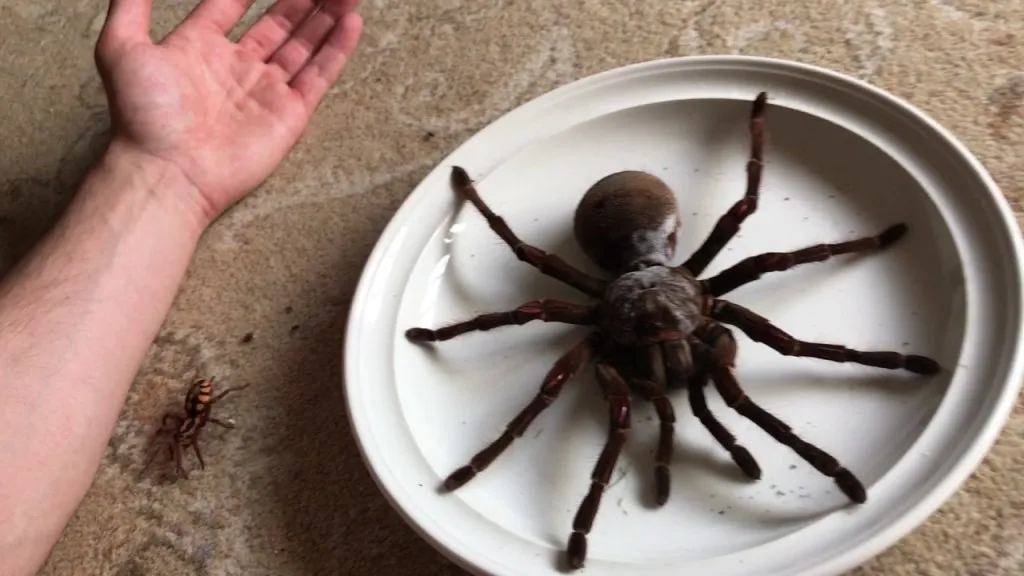
What are Tarantulas and Huntsman Spiders?
The world of arachnids is vast and diverse, filled with creatures that fascinate and, for some, frighten. Among the most well-known spiders are the tarantula and the huntsman spider. Both are large, hairy spiders, but they belong to different families and exhibit distinct characteristics. Understanding their differences, particularly in size, is the first step in appreciating these remarkable creatures. This article delves into a detailed comparison of tarantulas and huntsman spiders, focusing on their physical attributes, habitats, and, most importantly, which one typically comes out on top in the size contest.
Defining Tarantulas
Tarantulas are large, hairy spiders belonging to the Theraphosidae family. They are known for their imposing size, often becoming a centerpiece of attention in the pet trade and in the wild. These spiders are generally characterized by their robust bodies and long, hairy legs. They are found in various habitats, ranging from deserts to rainforests, across different continents. Tarantulas have a lifespan that can extend for many years, particularly in females, making them a long-term commitment for those who choose to keep them as pets. Their varied colors and patterns also add to their appeal and intrigue.
Habitat and Characteristics of Tarantulas

Tarantulas are adaptable creatures, found in a variety of habitats across the globe. They thrive in tropical rainforests, arid deserts, and grasslands. Their habitat preferences influence their behavior and appearance. Some species are terrestrial, dwelling in burrows they dig themselves, while others are arboreal, living in trees. They are nocturnal hunters, primarily preying on insects, but larger tarantulas may also consume small vertebrates like lizards or even small birds. Their defensive mechanisms include urticating hairs, which they flick off their abdomen as a defense against predators, and a bite that, while venomous, is rarely life-threatening to humans.
Understanding their habitat is key to understanding their size. The availability of food and the presence of predators in their natural environment can greatly influence their growth and overall size. For instance, tarantulas living in areas with abundant prey might grow larger compared to those in food-scarce regions. Similarly, the presence of predators, such as snakes or larger arachnids, can also affect their size as larger spiders may have a better chance of survival.
Physical Features and Size of Tarantulas
Tarantulas are renowned for their impressive size. Their bodies can range from about 1 inch to over 4 inches in length, with leg spans extending up to 10 inches or more in some species. The Goliath birdeater (Theraphosa blondi) is one of the largest tarantula species, often reaching leg spans of up to 12 inches. Their bodies are covered in dense hairs, which can vary in color depending on the species and habitat. These hairs serve various functions, including sensory perception, defense, and camouflage. Their fangs, while primarily used for capturing and injecting venom into prey, can also be a defensive tool.
Defining Huntsman Spiders
Huntsman spiders, belonging to the Sparassidae family, are also known for their large size and are commonly found in tropical and subtropical regions around the world. Unlike tarantulas, huntsman spiders are known for their flattened body shape, which allows them to squeeze into tight spaces. They are agile hunters and are often found in crevices, under bark, and in other concealed locations. These spiders are generally not considered dangerous to humans, although their size can be intimidating. Their hunting behavior and preference for living in human dwellings sometimes lead to encounters with people.
Habitat and Characteristics of Huntsman Spiders

Huntsman spiders are well-adapted to a variety of environments, including forests, caves, and even human dwellings. They are commonly found in Australia, Asia, Africa, and the Americas. Their flattened body shape is an adaptation that allows them to live in narrow spaces, such as under tree bark, in rock crevices, and behind loose objects. Unlike tarantulas, huntsman spiders do not build webs to catch prey. Instead, they are active hunters, relying on their speed and agility to capture insects and other small invertebrates. Their hunting prowess makes them beneficial in controlling insect populations.
Their presence in human dwellings often leads to encounters with people, but they are generally not aggressive and will typically try to escape rather than attack. Their habitat preferences also influence their size, with the availability of food and the warmth of the environment playing crucial roles in their development and growth. These spiders play an important role in their ecosystems, and their presence is a good sign of a healthy and balanced environment.
Physical Features and Size of Huntsman Spiders
Huntsman spiders are known for their large size and impressive leg span. They can have a body length of up to 1 inch, and a leg span that can reach up to 12 inches or more, rivaling some of the largest tarantula species. Their bodies are typically flattened, and they have long legs that extend outwards, giving them a crab-like appearance. Huntsman spiders come in various colors, ranging from brown to grey, often with mottled patterns that help them camouflage. They also have powerful jaws and fangs for capturing and subduing prey. Despite their intimidating size, huntsman spiders are generally not aggressive toward humans, preferring to flee when threatened.
Tarantula vs Huntsman Spider Size Comparison
When it comes to size, both tarantulas and huntsman spiders are impressive, but which one is typically bigger? The answer is not always straightforward, as size can vary greatly depending on the species and individual spider. However, in general, huntsman spiders and certain species of tarantulas are often comparable in size, with some huntsman spiders even exceeding the size of some tarantulas. The Goliath birdeater tarantula is one of the largest spider species by weight and leg span.
Leg Span and Body Size Differences

Leg span is a key metric when comparing the size of spiders. Both huntsman spiders and tarantulas can have impressive leg spans, with the largest individuals of both species reaching similar sizes. Some huntsman spiders have a leg span of over 12 inches, while certain tarantulas, such as the Goliath birdeater, can also reach or exceed this size. Body size, however, can vary. While both spiders have robust bodies, the body shape can differ, with huntsman spiders having a flatter build compared to the more rounded shape of many tarantulas. This can give huntsman spiders the advantage in fitting into tight spaces.
Factors Influencing Spider Size
Several factors can influence the size of both tarantulas and huntsman spiders. Genetics play a significant role, as some species naturally grow larger than others. Diet is another crucial factor; spiders with a consistent and nutritious food supply are more likely to reach their maximum size. Environmental conditions, such as temperature and humidity, can also affect growth rates. The availability of resources in their habitat, including food and shelter, can also impact their size. Spiders in environments with abundant resources often grow larger than those in resource-scarce areas. Additionally, the spider’s age and molting history can affect its size.
Size Comparison Which Spider is Typically Bigger?
Determining which spider is typically bigger is complex. Both huntsman spiders and tarantulas have species that can be quite large, and the specific species and individual spider being compared are key. However, the Goliath birdeater tarantula often holds the title for having the largest leg span, while some huntsman spiders are comparable in size. The largest huntsman spiders and the largest tarantulas are often in a close race to see who will be bigger, and it’s a very close call.
Other Factors to Consider

Beyond just size, there are other factors that set these spiders apart. Their behavior, venom potency, and habitat preferences also influence their interactions with humans and their roles in ecosystems. While both spiders are venomous, the venom of tarantulas is generally considered less potent than that of many other spiders. Huntsman spiders, on the other hand, are known for their speed and agility. Their habitat preferences also differ, with tarantulas often preferring burrows or secluded areas, while huntsman spiders are more likely to be found in human dwellings.
Geographical Distribution and Size Variance
The geographical distribution of tarantulas and huntsman spiders also plays a role in their size variance. For instance, tarantulas from South America, such as the Goliath birdeater, tend to be larger than those from North America. Similarly, huntsman spiders from Australia can reach impressive sizes. The specific environmental conditions of their habitat, including temperature, humidity, and food availability, contribute to the overall size differences observed within each species. This geographical variation highlights the adaptability of both spider types to different climates and ecosystems.
Diet and its Impact on Size
Diet is a crucial factor that affects the size of both tarantulas and huntsman spiders. A diet rich in protein and nutrients can help spiders grow larger and faster. In the wild, both types of spiders are opportunistic feeders, preying on whatever is available. Tarantulas may consume insects, small vertebrates, and even birds, while huntsman spiders primarily feed on insects and other invertebrates. In captivity, the diet can be carefully controlled to ensure optimal growth. Tarantulas in captivity are often fed crickets, cockroaches, and mealworms, while huntsman spiders may be given similar foods. The type and frequency of feeding directly impact the size and overall health of the spiders.
Conclusion The Size Showdown

In the contest of size between tarantulas and huntsman spiders, the answer is not always clear-cut. Both arachnids can reach impressive sizes, with the largest individuals of both species being comparable in leg span. The Goliath birdeater tarantula is often the largest by weight, while certain huntsman spiders may have longer leg spans. Ultimately, the title of ‘bigger’ depends on the specific species and individual spiders being compared. Both tarantulas and huntsman spiders are fascinating creatures, each with its unique adaptations and behaviors. Understanding their differences, including their size, helps us appreciate the incredible diversity of the natural world.